
Holborn and St Pancras, political tribalism and a Catholic way of doing politics
British politics has always been a funny old business, and this week has certainly been no exception. After what has been absolutely months of stagnation and uncertainty, Andy Burnham rolled into Number 10 and one could almost hear the universal sigh of relief that old stagnations could be forgotten and legislators of all shades could begin the enthusiastic process of parliamentary reinvention.
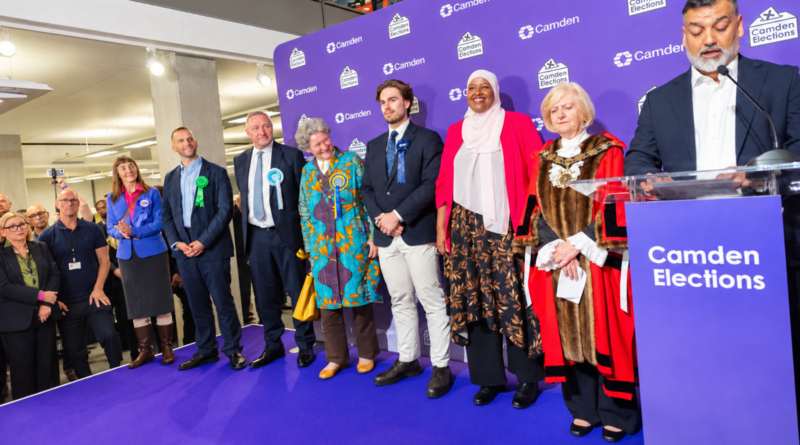
Typically, though, just as it was starting to look like everyone was working out where they stand, along comes the Holborn and St Pancras by-election, where Zack Polanski, the Green Party leader, secured 8,928 votes and 32.8 per cent of the poll, a respectable showing by any reasonable measure. Sadly for the Greens, the encouraging result was, although, not quite enough to trouble Labour’s Sagal Abdi-Wali, who retained the constituency with 12,292 votes and a majority of 3,364 – though few seemed to notice (or wanted to admit) that Abdi-Wali gained 6,592 fewer votes than the previous incumbent, Sir Keir Starmer, and her result represented a 34.9% reduction in Labour’s vote total.
Even more significantly, despite all the hype and significance that preceded this by-election, the turnout fell from approximately 54.5% in 2024 to a miserable and non-mandating 38.8% last night, which hardly indicates Britain’s political decline is reversing.
For Polanski, this morning must have felt very strange – disappointment that his efforts to become an MP failed, but consolation that his party came a very respectable second. That might have given him a confident boost, but the fallout from the decision taken by the party at last weekend’s Green Party Conference on the vexed question of Palestine has this morning left their leader facing hard questions about his leadership, and his political future.
Whilst the Palestine debate is one thing – and people have extremely strong and conflicting views on that – the distinctly targeted battering that Polanski and the Green Party have taken over the course of this week raises not only uncertainty about who will eventually win this increasingly complicated political contest – but whether we have forgotten how to disagree with one another without assuming that those who think differently must somehow be our enemies.
There has long been a tendency in British politics to imagine that anyone who disagrees with us must be either foolish, ill-informed or morally suspect, which is not only a rather exhausting way to conduct public life but also a deeply unhelpful way of understanding the complexity of human judgement.
Much of this stems from the monochrome and confrontational origins of the British political system – we are either rich or poor, have or have-not, militarist or pacifist, left or right, liberal or authoritarian, conservative or reactionary. And if these are states of living and social circumstance, they have been exploited ruthlessly by many legislators – to the extent that whilst an ordinary person may disagree with the conclusions of another, we seem to have come to a point in our history where the assumption is that every person who thinks or votes differently from us has somehow abandoned their moral compass and the world is divided into the righteous and the hopelessly misguided.
Whilst this may have become the depressing default in contemporary, secular society, the Catholic perspective demands of us that the dignity of the human person is not something earned by holding the correct political opinions but rather belongs to every individual by virtue of being created in the image and likeness of God. In the Catholic sphere, there will always be a considerable difference between challenging an argument and belittling the person making it and that Christians, acting in good conscience, may arrive at very different practical political judgements while still remaining faithful to the same fundamental moral principles. (Second Vatican Council, Gaudium et Spes, §43 (7thDecember 1965)
One of the more revealing features of recent elections has been the growing importance of tactical voting, with people increasingly casting their ballots not simply for the party they support but to prevent another party from winning, producing some rather strange political bedfellows along the way.
There is nothing inherently wrong with tactical voting, since democracy allows us to weigh competing priorities and make practical judgements, but there is something rather dispiriting – and even morally questionable – about a political culture in which our principal motivation becomes stopping someone else rather than supporting a positive vision of the society we wish to build.
Catholic social teaching offers a different starting point, one in which we are encouraged to think beyond our own political tribe and to think beyond imagining that justice will somehow arrive once the other lot have been removed from office. Our alternative – which concerns the social conditions that allow individuals, families and communities to flourish – is known as ‘the common good’; it belongs to all parties and none, and pursuing it requires patience, compromise and the occasional uncomfortable recognition that our political opponents might actually have a point, however reluctant we may be to admit it.
Then there is also the Catholic principle of subsidiarity, which reminds us that not every problem needs to be – nor indeed always should be – settled by politicians in Westminster. Families, neighbourhoods, local authorities and voluntary organisations all possess unique and important responsibilities and wisdom of their own, so it’s very tempting to wonder if a more diverse political system could create opportunities for these voices to be heard rather than leaving every national question to be fought out between two competing party machines.
Whether such political diversity would actually produce greater cooperation or simply more politicians shouting at one another remains to be seen, although if we truly believe in the divinely-endowed dignity of the human spirit one might reasonably hope that a democracy containing more voices would eventually learn the value of listening to them.
For Zack Polanski, the challenge of creating a more equitable and tolerant political landscape is particularly apposite because the Green Party began with a clear and distinctive concern for the protection of the natural world, reminding the rest of us that economic growth offers rather limited comfort if we leave behind a damaged planet. More recently, the party has become associated increasingly with a much wider collection of political causes, ranging from housing and public ownership to international conflicts and questions of identity.
There is nothing necessarily wrong with such an expansion, since environmental destruction, poverty and inequality are closely connected, but a political party cannot hope to be all things to all people without eventually explaining what holds its political vision together, particularly when its founding environmental purpose risks being overshadowed by controversies that have little obvious connection with ecological responsibility.
The recent Green Party conference dispute over Zionism, Israel and Palestine illustrated the difficulty vividly, since the highly controversial motion that was debated and passed at their conference involved careful consideration of profoundly sensitive questions involving history, identity, security, human rights and competing national aspirations – as well as the need to defend human rights and condemn abuses of the human person.
The difficulties and differences that Green Party members struggled with during last weekend’s debate were nothing unique – in fact they mirrored exactly the very same difficulties and challenges that all parties and agencies are trying to navigate in bringing a peaceful solution to the Middle East crisis.
On this issue, Catholic teaching requires the rejection of antisemitism, respect for human dignity and the pursuit of a just peace that recognises the rights and security of Israelis and Palestinians alike, while reminding us that difficult moral questions rarely become easier when reduced to slogans or turned into tests of ideological loyalty. Any party hoping to govern must therefore demonstrate that it can accommodate principled disagreement without treating every dissenting voice as a troublesome heretic, and Catholics, of all people, appreciate the dangers of allowing disagreement to become an excuse for exclusion.
Whilst the Zionism moment was jumped on by political opponents of the Green Party, and filled a few legacy media hours, it is unlikely to uproot the political landscape nor destroy the Green Party. In some respects it has even fulfilled its function, to put the problem of the Middle East to the forefront of public and political debate – though some hard lessons will need to be learned about the clumsy and ill-framed language of the motion debated, which has left many in the UK Jewish community now feeling very fearful for their safety.
If Polanski wants the Greens to move on from the events of this week and become a credible national force, he might do worse than return to the original environmental vision of the party, not by abandoning social justice but by demonstrating how ecological responsibility can improve ordinary lives through initiatives such as better home insulation, cleaner public transport, restored rivers and green spaces, and an energy transition that creates opportunities without abandoning workers in traditional industries.
Of course, none of this is particularly glamorous, nor does it always produce the sort of dramatic slogans that excite political conferences, but it matters enormously to families and communities whose immediate concerns are often less about abstract political arguments than the practical business of making ends meet.
There will inevitably be difficult choices, because renewable energy requires investment, farmers have livelihoods to protect and industrial communities cannot simply be told that their economic future is an unfortunate casualty of environmental progress (which is why, incidentally, Catholic social teaching insists that the burdens of change must be shared fairly and that those most affected should have a meaningful voice in the decisions being made).
Like compromise in politics, that may just occasionally require environmental campaigners to acknowledge that a farmer, engineer or factory worker knows something worth hearing, just as it may require those working in traditional industries to recognise that ecological concerns cannot simply be dismissed as the preoccupations of people with too much time on their hands. Such conversations are rarely easy, but they are much preferable to a politics in which everyone retreats into their own corner and assumes that wisdom resides exclusively among those who already agree with them.
The wider lesson of Holborn and St Pancras is that British politics may be entering a period in which traditional loyalties matter less and political identities become more fluid, and frankly this need not be a bad thing – provided that we remember that a healthy democracy does not require everyone to agree, but does require a willingness to distinguish between disagreement and hostility.
We Catholics have no obligation to support the Greens, Labour, Conservatives, Liberal Democrats or Reform UK, but we do have a responsibility to examine political claims through the lens of human dignity, solidarity, subsidiarity and the common good, recognising goodness and wisdom wherever these appear, even when they come from an unexpected political direction.
The Catholic vision of integral ecology reminds us that we share one common home with people who vote differently, worship differently, think differently and occasionally irritate us enormously, and that the Christian response is not to abandon our convictions but to hold them with enough confidence and humility that we can listen seriously to someone else’s.
Perhaps that is what British politics needs more than anything: a little humility, a little generosity and a willingness to admit that the other fellow might occasionally be right, even when doing so requires us to swallow a certain amount of political pride while learning to engage constructively with those who see the world differently.
Joseph Kelly is a Catholic writer and public theologian