ECUMENICAL: Church of England publishes major teaching document on care for creation as Synod approves new annual festival
The Church of England General Synod has this week welcomed three significant milestones in its response to the climate and nature crises.
Members considered a major new teaching document from the House of Bishops, approved a new annual Festival of Creation in Christ, and received an update on progress towards the Church’s Net Zero Carbon ambitions.
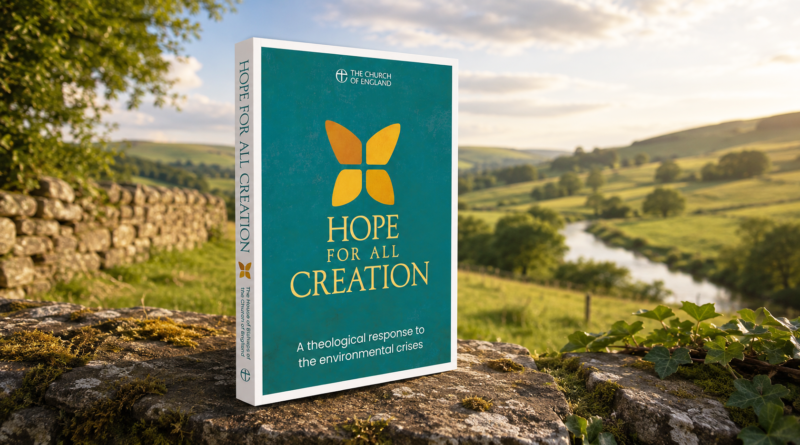
At the heart of the discussions was Hope for All Creation: A Theological Response to the Environmental Crises, a landmark teaching document authored by the Faith and Order Commission and adopted by the House of Bishops. The document sets out a Christian understanding of the environmental crises facing the world, rooting care for creation in the biblical story of creation, redemption and renewal, structured around the themes See, Reflect, Respond.
Pope Francis made “care for creation” a central pastoral priority, famously publishing his landmark 2015 encyclical Laudato si’ on protecting our shared environment, and this latest document from the Church of England document echoes very similar themes, arguing that care for creation is not an optional concern but a core part of Christian discipleship and mission. It presents environmental action as an expression of hope rooted in God’s purposes for creation, highlighting the Church of England’s role in responding to ecological crises alongside people of good will across society and around the world.
Alongside the publication of Hope for All Creation, Synod gave final approval to a new annual Festival of Creation in Christ, to be celebrated in Church of England churches on the first Sunday in September, the same day that the Catholic Church celebrates its World Day of Prayer for the Care of Creation. The new Festival is one of the fruits of a growing ecumenical movement across churches worldwide and offers an opportunity for Christians to give thanks for God’s creation and redemption of the world, reflect on humanity’s responsibility to care for the natural world and pray for its renewal.
The title “Creation in Christ” emphasises that creation is understood through the person and work of Jesus Christ: created through him, sustained in him and destined for renewal in him. The new liturgical resources include prayers, readings and other material centred on creation, stewardship and hope, drawing Christians through worship and prayer toward playing their part in the Church’s mission to “safeguard the integrity of creation and sustain and renew the life of the earth”.
Synod also received a progress report on the Church of England’s Net Zero Carbon Programme. Since the Church committed in 2020 to achieving net zero carbon emissions, £30 million has been invested in the first phase of the programme, supporting dioceses, churches, cathedrals, schools and clergy housing. Every diocese has now received funding to build net zero capacity, more than 6,000 churches are engaged with Eco Church, and over 1000 churches have been supported with decarbonisation projects. The programme has also leveraged more than £31 million in additional funding from parishes, communities, trusts and government schemes.
The report noted that significant challenges remain and that achieving long-term emissions reductions will require sustained commitment, investment and local action across the Church. Additional funding has been allocated through to 2034, with the Church reaffirming its commitment to work towards its net zero ambitions while creating warmer, more energy-efficient buildings that support worship, mission and community life.
New Festival of Creation in Christ
Introducing the motion to give final approval to the Festival of Creation in Christ and the Commemoration of the Twenty-One Martyrs of Libya, the Bishop of Lichfield, Michael Ipgrave, said:
“The Festival of Creation in Christ comes before Synod after extensive ecumenical conversations involving churches across the world, including the Anglican Communion, the World Council of Churches, the Roman Catholic Church and Orthodox partners.
“The new title recognises the placing of Christ’s role in creation at the very centre: creation made through Christ, held together in Christ and destined for renewal in Christ.
“This Festival is an opportunity to give thanks for God’s gift of creation and to recognise our responsibility to cherish it. Together with the teaching document Hope for All Creation, it reminds us that our response to climate and environmental crises must be drawn from the faith, life and worship of the Church.”
Hope for All Creation welcomed
Introducing the presentation of Hope for All Creation, the Bishop in Europe, Robert Innes, Chair of the Faith and Order Commission, said the document was intended to help shape the life of the Church through study, discussion and action, and argued that environmental challenges require both practical and spiritual responses.
“The book Hope for All Creation is intended not just to be read but to be studied and discussed, to shape our corporate ethos, change our behaviour and lead to action,” he said.
“Hope has been described as the future dimension of faith, and these are issues that are fundamentally spiritual, which is why the response of our church and other churches is crucial.”
William Leeming, a General Synod youth member from the Diocese of Blackburn, spoke from the experience of his farming family and highlighted the concern many young adults feel about the future and the need for practical action.
“We are noticing wetter winters and warmer summers,” he said.
“The unusual hot and dry climate we experienced last year resulted in a small yield of grass in the summer and limited silage storage over winter. I think the book Hope for All Creation reflects a lot of how I feel about our current climate crisis.
“We cannot continue to tick empty boxes as a self-satisfaction to combat serious issues. We need hands-on action.”
Mike Royal, General Secretary of Churches Together in England, welcomed the report’s focus on God as Creator and humanity’s responsibility for stewardship, while highlighting the disproportionate impact of climate change on poorer nations.
“I love the starting point of the report as Creator God, and that humanity has a unique responsibility and calling to steward God’s creation,” he said.
“The impact of climate change is always greater on those with the least resources to respond, and I hope the Feast of Creation in Christ becomes as widely celebrated across our churches as Harvest is today.”
The report is available as a full-colour, illustrated book from Church House Publishing, and you can also read a digital version of Hope for All Creation.
Also available: Hope for All Creation – Further Reading and Resources.
Progress on Net Zero
Introducing the Net Zero Carbon Programme report, the Bishop of Norwich, Graham Usher, said climate change remained “arguably the most pressing challenge of our times” and described the Church’s net zero ambition as a response rooted in Christian discipleship, justice and care for creation.
“As Christians, we have a duty not just to speak out but also to act and lead by example, in witnessing how we care about God’s creation,” he said.
“The ambition has driven change and progress that would not otherwise have happened.”
__________________________