
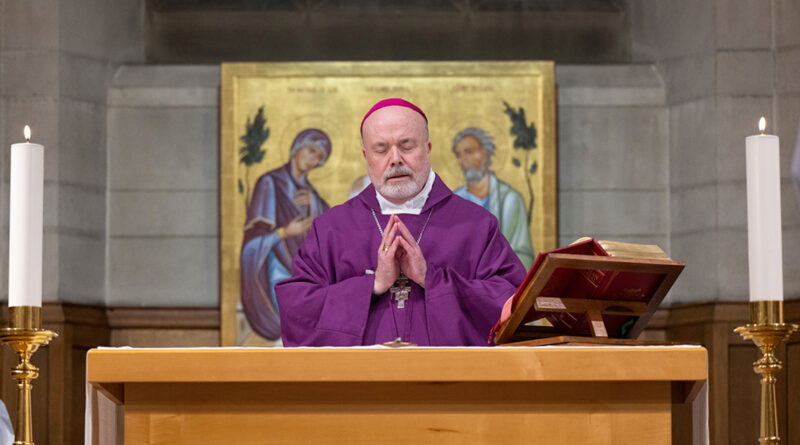
Nearly half a million Catholics could be brought under one diocese as bishop backs historic Yorkshire merger
A major reorganisation of the Catholic Church in northern England has moved closer after Bishop Marcus Stock formally recommended bringing the Dioceses of Leeds, Middlesbrough and Hallam together under a single diocesan structure.
The proposals, which would affect almost 500,000 Catholics across Yorkshire and neighbouring areas, follow months of consultation with clergy, religious communities, parishioners, schools and Church organisations.
A 46-page report, made public on Wednesday (14th October), reveals substantial support for unification, although concerns remain about the future of individual parishes, the preservation of local identities and the practical challenges of managing such a large diocese.
Bishop Stock, who currently has responsibility for all three dioceses, has concluded that combining them could provide a stronger foundation for the Church’s future mission, particularly at a time of declining Mass attendance and increasing pressures on clergy.
The report was sent to Pope Leo XIV at the end of August, and the final decision now rests with the Vatican.
Consultation Reveals Broad Support
The consultation exercise began in March 2026 at the request of Pope Leo XIV, with Catholics invited to consider the advantages and disadvantages of bringing the three dioceses together.
An online questionnaire attracted 840 responses, while nine in-person consultation meetings were held, alongside discussions involving clergy, diocesan officials, trustees and representatives of Catholic education.
The findings indicated considerable support for closer cooperation, particularly where sharing resources and expertise could improve pastoral services and strengthen evangelisation.
However, contributors also highlighted the importance of maintaining the distinctive traditions and identities of local Catholic communities.
Concerns included the possibility of further parish closures, additional responsibilities for already stretched clergy and the risk that decision-making could become increasingly distant from individual congregations.
Effective communication, transparency and opportunities for parishioners to remain involved in future decisions were identified as essential.
The consultation also highlighted the importance of giving young Catholics a greater voice in shaping the Church’s future.
Falling Mass Attendance Adds Urgency
The proposed reorganisation comes against a background of significant changes in Catholic life across the region.
Figures included in Bishop Stock’s report show that average combined Mass attendance in the three dioceses declined from 83,409 in 2000 to 40,221 in 2025, a fall of approximately 52 per cent.
The number of baptisms also dropped, from 4,569 to 2,786 annually over the same period.
Meanwhile, the number of diocesan priests holding office fell from 347 to 128, representing a decline of around 63 per cent.
The total number of parishes decreased from 274 to 193.
These developments have increased pressure on the Church’s existing structures, with fewer priests serving communities spread across a substantial geographical area.
The three dioceses currently have a combined Catholic population of 495,817.
Of these, Leeds accounts for 229,453 Catholics, Hallam for 140,571 and Middlesbrough for 125,793.
Together, they encompass 193 parishes, with 116 diocesan priests in active ministry, 51 missionary and religious priests, and 41 permanent deacons.
Supporters of unification believe that bringing these resources together could allow the Church to respond more effectively to changing pastoral needs while reducing duplication in administration.
Bishop Stock’s Expanding Responsibilities
Bishop Marcus Stock has led the Diocese of Leeds since 2014.
His responsibilities expanded in December 2025 when Pope Leo XIV appointed him Apostolic Administrator of Middlesbrough following the retirement of Bishop Terence Drainey.
A further appointment followed in March 2026, when Bishop Ralph Heskett resigned as Bishop of Hallam because of declining health.
Bishop Stock was subsequently appointed Apostolic Administrator of Hallam, placing all three dioceses under his care while their future was considered.
Although the dioceses already share the same bishop in practice, they remain separate ecclesiastical jurisdictions.
Formal unification would therefore represent a much more significant change, requiring decisions about governance, finances, safeguarding, administration and the organisation of pastoral services.
A Return to Historic Roots
The possibility of reunification also reflects the Catholic Church’s history in Yorkshire.
The Diocese of Beverley was established in 1850 and originally covered much of the territory now served by Leeds and Middlesbrough.
In 1878, Pope Leo XIII divided Beverley into two separate dioceses, creating the present diocesan structures of Leeds and Middlesbrough.
Hallam was established considerably later, in May 1980, from areas previously belonging to the Dioceses of Leeds and Nottingham.
A merger would bring much of the historic Yorkshire Catholic community together under one diocesan administration, although the proposed territory would also include areas outside Yorkshire.
What Happens Next?
Despite the encouraging consultation findings, the merger has not yet received final approval.
Bishop Stock’s recommendation has been submitted to Pope Leo XIV and the Vatican’s Dicastery for Bishops, which will consider the proposal before any definitive decision is announced.
Even if approval is granted, the practical work of combining the dioceses could take several years.
Questions surrounding diocesan administration, parish organisation, finances, clergy deployment and Catholic education would all require careful consideration.
For Catholic communities across Leeds, Middlesbrough and Hallam, the proposals represent one of the most significant potential changes to the Church’s organisation in the region for generations.
While the outcome remains uncertain, the consultation has made clear that many Catholics see opportunities for a more collaborative and sustainable future, provided that local communities remain central to whatever new arrangements emerge.
The decision now lies with Rome.
© CBCEW/Mazur
READ THE FULL REPORT:
https://www.dioceseofleeds.org.uk/publication-of-the-bishops-consultation-report-to-the-holy-father/